
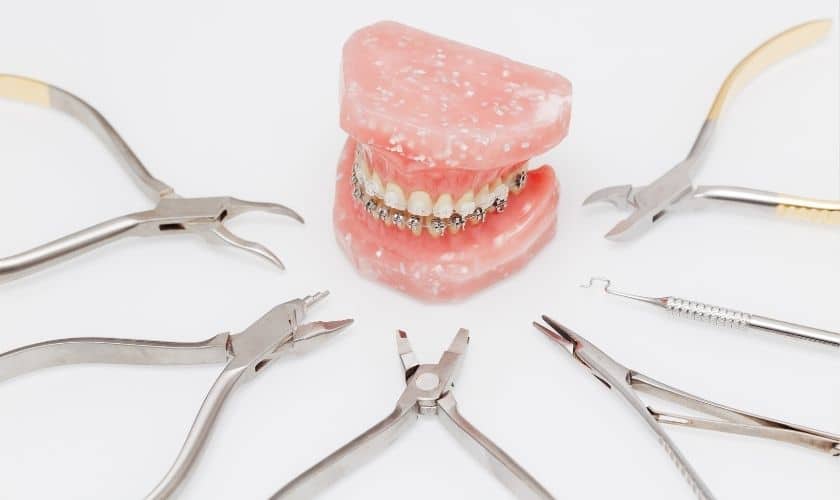
Orthodontic treatments have evolved significantly over the years. It offers a variety of options to correct the misaligned teeth and improve smiles. If you’re considering orthodontic treatment then it’s required to know the different types of treatment options available. Whether you’re an adult or a parent considering options for your child, this guide will help you make an informed decision.
Traditional Metal Braces
Traditional metal braces are the most common type of orthodontic treatment. These braces are highly effective for correcting a wide range of dental issues, from minor misalignments to more severe problems like overbites, underbites, and crossbites. Metal braces consist of stainless steel brackets attached to each tooth, connected by a thin archwire. The orthodontist tightens the wire periodically to gradually move the teeth into the desired position.
One of the main advantages of traditional metal braces is their durability and effectiveness. They are suitable for patients of all ages, making them a popular choice for many. Additionally the modern braces are more comfortable and have become smaller than those available in the past and improves the overall experience.
Ceramic Braces
Ceramic braces are similar to traditional metal braces but use clear or tooth-colored brackets instead of metal ones. This makes them less noticeable and an appealing option for teenagers and adults who are concerned about the aesthetics of wearing braces. Ceramic braces work in the same way as metal braces, with a wire connecting the brackets and periodic adjustments by the orthodontist.
While ceramic braces are less visible, they are slightly more fragile and can be more expensive than traditional metal braces. However, for those looking for a more discreet option without compromising effectiveness, ceramic braces are a great choice.
Lingual Braces
Lingual braces are another less visible orthodontic option. These braces are similar to traditional metal braces, but the brackets and wires are placed on the backside of the teeth, making them invisible from the front. Lingual braces are custom-made to fit the contour of each tooth, and they work just as effectively as conventional braces.
However, because of their placement, lingual braces can be more challenging to clean, and some patients may experience slight changes in their speech at first. They may also be more uncomfortable initially and can be more expensive than other types of braces. Nonetheless, lingual braces offer a completely hidden way to straighten teeth, which is a significant advantage for many patients.
Invisalign
Invisalign is a popular orthodontic treatment that uses a series of clear, removable aligners to gradually move teeth into their proper position. The aligners are custom-made for each patient and are changed approximately every two weeks to continue moving the teeth. Invisalign is highly popular among adults and teens who want a less noticeable way to correct their teeth.
One of the main benefits of Invisalign is that the aligners are removable, allowing patients to eat and drink without any restrictions. This also makes it easier to maintain oral hygiene compared to traditional braces. However, success with Invisalign largely depends on patient compliance. The aligners must be worn for at least 20-22 hours per day to be effective.
Invisalign is suitable for treating a variety of dental issues, but it may not be the best option for severe cases. An orthodontist can help determine if Invisalign is the right choice for your specific needs.
Self-Ligating Braces
Self-ligating braces are similar to traditional metal and ceramic braces, but they use a specialized clip instead of elastic bands to hold the wire in place. This clip reduces friction and allows the teeth to move more freely, potentially resulting in faster treatment times and fewer visits to the orthodontist.
Self-ligating braces are available in both metal and ceramic versions, offering a discreet option for those who prefer it. They are effective for a wide range of orthodontic issues and can be more comfortable than traditional braces due to the reduced pressure on the teeth.
Retainers
While not a primary method for moving teeth, retainers play a crucial role in orthodontic treatment. After braces or aligners have successfully straightened the teeth, retainers are used to keep the teeth in their new positions. There are two main types of retainers: removable and fixed. Removable retainers can be taken out for eating and cleaning, while fixed retainers are bonded to the back of the teeth.
Wearing a retainer as directed by your orthodontist is essential to prevent the teeth from shifting back to their original positions. This final phase of treatment ensures that your new smile remains perfect for years to come.
In Summary
Choosing the right orthodontic treatment depends on various factors, including the complexity of your dental issues, your lifestyle, and your aesthetic preferences. Consulting with an experienced orthodontist in Victorville will help you determine the best option for your needs. Whether you opt for traditional metal braces, ceramic braces, lingual braces, Invisalign, or self-ligating braces, the goal is the same: to achieve a healthy, beautiful smile that boosts your confidence and improves your oral health.
Orthodontic treatments are more advanced and varied than ever before, ensuring there’s a solution for everyone. By understanding the different options available, you can make an informed decision and embark on the journey to a better smile with confidence.