
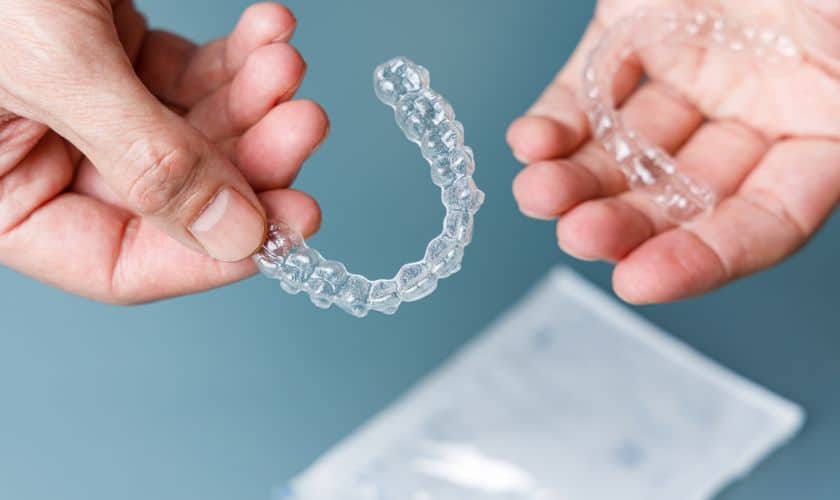
Invisalign has revolutionized the field of orthodontics, offering a discreet and convenient alternative to traditional braces for straightening teeth. However, despite its popularity, there are still several myths and misconceptions surrounding Invisalign treatment.
Most common myths about Invisalign:
Myth #1: Invisalign Is Only for Minor Dental Issues One of the most common myths about Invisalign is that it’s only suitable for minor dental issues. In reality, Invisalign can effectively treat a wide range of orthodontic problems, including crowding, spacing, overbites, underbites, and crossbites. Advanced features like SmartTrack® material and precision attachments make it possible to address even complex cases with clear aligners.
Myth #2: Invisalign Takes Longer Than Traditional Braces Another misconception is that Invisalign treatment takes longer than traditional braces. While the duration of treatment varies depending on individual cases, Invisalign often achieves results in a comparable timeframe to braces. In some cases, treatment with Invisalign may even be faster due to the flexibility and efficiency of clear aligners.
Myth #3: Invisalign Is Painful Some people believe that Invisalign treatment is painful because of the pressure exerted on the teeth to move them into alignment. However, discomfort during Invisalign treatment is usually mild and temporary, similar to what you might experience with braces. Most patients adapt quickly to wearing aligners and find them to be more comfortable than metal braces.
Myth #4: Invisalign Is Expensive While it’s true that Invisalign treatment may involve an initial investment, many people are surprised to learn that the cost of Invisalign is often comparable to that of traditional braces. Additionally, many dental insurance plans offer coverage for Invisalign, making it a more affordable option for some patients.
Myth #5: You Can’t Eat or Drink Anything While Wearing Invisalign Another common myth is that you can’t eat or drink anything besides water while wearing Invisalign aligners. In reality, one of the key advantages of Invisalign is that the aligners are removable, allowing you to enjoy your favorite foods and beverages without restriction. However, it’s essential to remove your aligners before eating or drinking anything other than water to prevent damage and maintain proper oral hygiene.
Conclusion:
Invisalign is a highly effective and versatile orthodontic treatment option that dispels many common myths and misconceptions. By debunking these myths, we hope to empower you to make an informed decision about your orthodontic care and consider Invisalign as a viable solution for achieving a straighter, healthier smile. If you’re interested in learning more about Invisalign or exploring whether it’s right for you, consult with a qualified Invisalign provider who can assess your needs and recommend the best course of treatment.